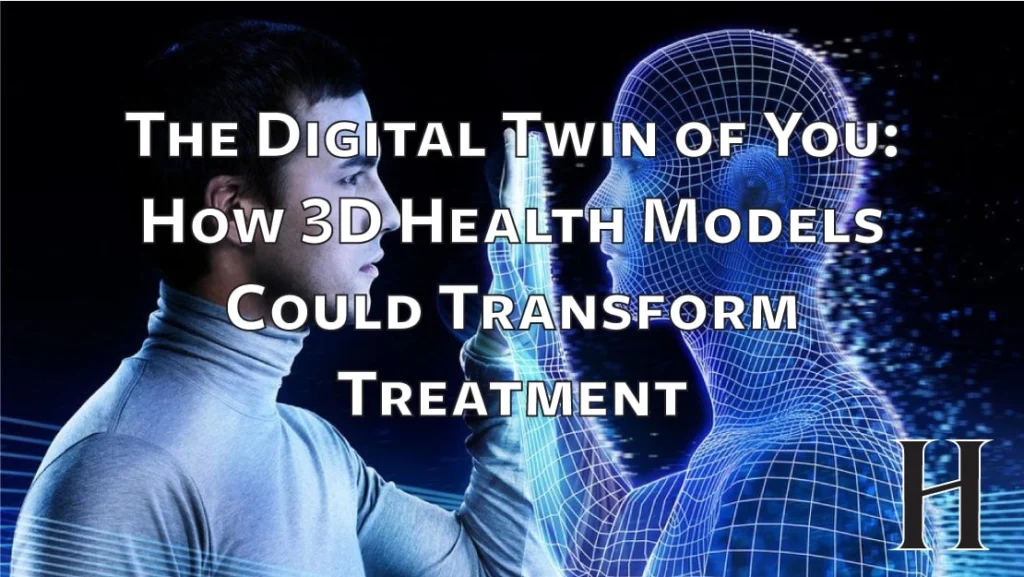

Imagine sitting in your doctor’s office as a holographic version of your heart beats in front of you. It responds realistically, adapting in real time to stress, medication simulations, or surgical predictions. Instead of your physician guessing how your body might react to treatment, they already know—because they tested everything first on your digital double.
This isn’t science fiction anymore. It’s the future of healthcare, powered by digital twin technology.
As medicine shifts from generalized protocols to fully individualized care, 3D health models—so-called digital twins—are emerging as one of the most transformative tools in modern treatment. With artificial intelligence, imaging, genomics, and wearable sensors merging into one unified system, your digital twin could soon become your most accurate health advocate.
What Is a Health Digital Twin?
A digital twin in healthcare is a real-time, bio-digital replica of your body created using deep patient data: imaging scans, biometrics, genomic sequencing, heart rhythms, sleep cycles, glucose levels, and more. It’s not just a static 3D representation—it’s a living model that evolves as you do.
Unlike traditional health records, which are often fragmented and reactive, a digital twin is continuous, predictive, and deeply integrative. It connects the dots between systems in your body and uses AI to simulate what might happen next.
Core technologies behind digital twins:
- AI and machine learning to predict outcomes and detect patterns
- Biomedical imaging like CT, MRI, and ultrasound to reconstruct organs in 3D detail
- Wearable sensors (ECG, HRV, glucose, sleep tracking)
- EHR data streams aggregating clinical history
- Genomic and metabolic data to personalize drug and treatment responses
In other words, the digital twin isn’t just a model—it’s an evolving ecosystem that mirrors your biological reality.
How a Digital Twin Is Built: Behind the Scenes of Your 3D Health Model
To build a digital twin, you don’t start with an avatar—you start with raw biological signals.
Step-by-step, here’s how it works:
- Data Capture
Medical imaging captures organs, tissues, and structures in precise detail. - Sensor Integration
Wearables feed in heart rate variability, glucose fluctuations, oxygen saturation, and sleep patterns. - Genomic + Biomarker Input
DNA and blood markers reveal predispositions and metabolic behavior. - Simulation Modeling
AI reconstructs your data into a visual, interactive 3D twin. - Treatment Testing & Forecasting
Clinicians run virtual scenarios to test what might happen before trying anything on your physical body.
For the patient, this means one thing: confidence in decisions that used to feel uncertain.
Imagine being able to see whether a surgery carries high risk before you’re on the operating table—or knowing how your body will respond to chemotherapy before it enters your bloodstream.
How Digital Twins Could Revolutionize Treatment
The true promise of digital twins isn’t novelty—it’s safety, precision, and personalization.
1. Surgical Simulation Without the Scalpel
Before surgeons operate, they can test every cut, stitch, and angle on your digital replica.
This reduces:
- Operating time
- Complication risks
- Post-operative trauma
- Recovery time
Hospitals using early versions of digital modeling have already reported reduced procedure times and fewer readmissions.
2. Personalized Cancer Therapy
No two tumors behave the same. Digital twins simulate tumor growth, drug resistance, and immune response, allowing oncologists to:
- Test drug combinations
- Adjust dosing
- Predict tumor shrinkage patterns
- Avoid toxic reactions
Instead of fighting blind, treatment becomes precise, targeted, and patient-specific.
3. Advanced Cardiology Modeling
Heart twins can simulate how a patient’s cardiovascular system reacts under stress, medication, and even lifestyle changes.
Applications include:
- Predicting arrhythmia events
- Testing stent placement
- Modeling blood flow post-surgery
- Personalizing pacemaker settings
This shifts cardiology from reactive emergency management to preventative precision care.
4. Chronic Disease Monitoring
Conditions like diabetes, arthritis, and COPD often evolve unpredictably.
Digital twins allow ongoing disease progression modeling, giving clinicians accurate forecasting of when and how conditions may worsen.
5. Predictive Drug Response
Instead of prescribing a standard dose based on “average patient” metrics, doctors can simulate:
- How fast you metabolize a drug
- Side-effect likelihood
- Best therapeutic window
This technology fundamentally ends trial-and-error prescribing.
AI as the Brain Behind the Digital Twin
Digital twins are only as smart as the systems powering them. AI drives their predictive accuracy through:
- Pattern recognition invisible to the human eye
- Risk assessment for cardiac events, metabolic dysfunction, neurological decline
- Multivariable simulations that consider genetics, lifestyle, environment, and medication interactions
AI isn’t replacing clinicians—it’s enhancing them.
It’s the difference between guessing and knowing.
With accurate predictions:
- Doctors intervene earlier
- Patients avoid catastrophic health events
- Treatment paths are measured, not experimental
Real-World Case Study: When Virtual Patients Save Lives
In early implementations, several cardiology departments used digital heart twins to plan complex surgeries. Surgeons simulated multiple procedural paths before choosing the safest approach.
Outcomes included:
- Reduced surgical times (no mid-procedure guesswork)
- Lower anesthesia exposure
- Fewer complications
- Faster recovery windows
Another early use case comes from oncology, where digital twins were used to test chemotherapy combinations before real administration. With predictive toxicity modeling, clinicians avoided serious side effects for patients with unique metabolic risks.
This is healthcare that sees the future before it happens.
Ethical, Privacy, and Security Challenges
Digital twins unlock immense potential—but also new vulnerabilities.
Data Privacy
Health data becomes more detailed, continuous, and identifiable.
Who owns it?
- The patient?
- The health system?
- The technology vendor?
Algorithmic Bias
If AI models are trained on limited populations, digital twins may underrepresent:
- Minority groups
- Rare disease patterns
- Atypical biological profiles
Data Security
A twin contains a patient’s complete biological blueprint, making it a high-value target for cybercrime.
Regulatory Boundaries
As twins move from research to mainstream, oversight must evolve:
- Data consent frameworks
- Biometric privacy laws
- AI transparency standards
The technology is ready—but policy must catch up.
What the Future Looks Like
The rise of digital twins signals medicine’s final shift from reactive to predictive care.
Soon:
- Annual checkups may include scanning your digital twin, not just your physical vitals
- Treatments will be chosen based on simulation results, not protocol averages
- Preventative medicine will be personalized and continuous
Instead of waiting for disease to appear, clinicians will intervene when risk curves begin to shift—even before symptoms.
Digital twins won’t just change how we treat illness—they’ll redefine what it means to stay well.
Conclusion: Your Digital Twin Is Coming—Are You Ready?
Digital twins represent more than innovation—they represent a new category of healthcare where precision replaces possibility, and certainty replaces speculation. From cancer and heart disease to chronic conditions and pre-operative planning, they empower clinicians and protect patients through knowledge, simulation, and foresight.
A future where your doctor consults your digital replica before treating you isn’t hypothetical—it’s imminent.
So here’s the real question:
Would you trust a digital version of yourself to guide life-changing medical decisions?
Share your thoughts in the comments. Your digital health story may be just beginning.