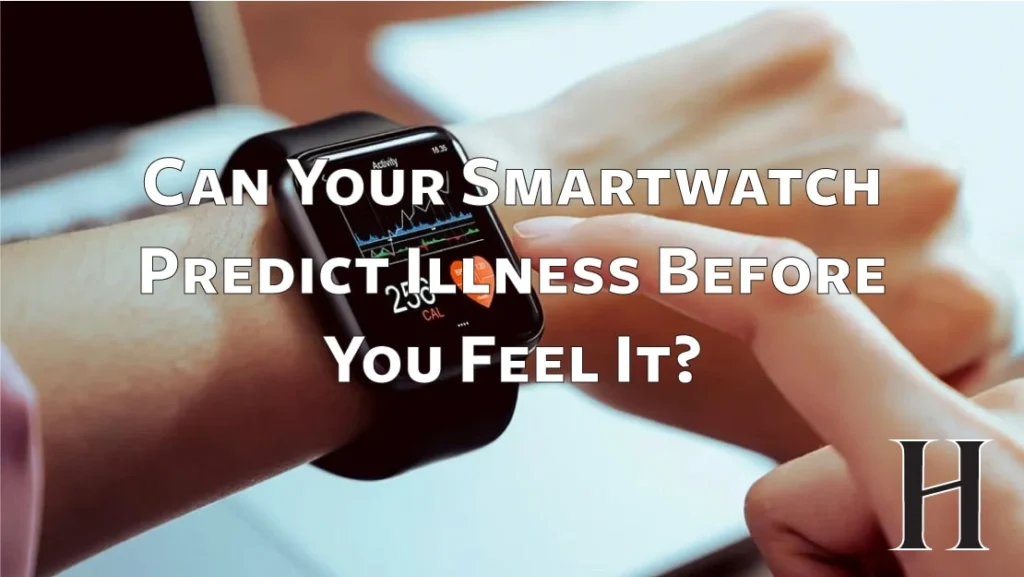

Your smartwatch vibrates with an alert: your resting heart rate is unusually high, and your sleep quality dropped sharply last night. You feel fine—maybe a little tired—but nothing out of the ordinary.
Two days later, you wake up with a sore throat, body aches, and a fever.
Sound familiar?
With millions of people now using smartwatches daily, a growing number of stories describe devices detecting subtle health changes before symptoms appear. But is this just coincidence—or can your smartwatch truly predict illness before you feel it?
Today, we explore the science, the studies, and the real potential of wearable health tech to act as an early-warning system for your body.
The Science Behind Early Illness Detection
Before symptoms show up, your body often begins to shift in quiet but measurable ways. These changes can be picked up by your smartwatch’s sensors long before you connect the dots yourself. Some of the most telling signals include:
Elevated Resting Heart Rate (RHR)
When your immune system kicks into gear, heart rate rises—a common early sign of infection.
Lower Heart Rate Variability (HRV)
HRV reflects how well your nervous system is managing stress. Illness, inflammation, and fatigue can all cause it to drop.
Skin Temperature Spikes
Some wearables monitor subtle increases in skin temperature that may indicate fever onset.
Sleep Disruption
Even if you don’t consciously feel unwell, your body may sleep restlessly or wake frequently when fighting sickness.
Individually, these signals might not mean much. But smartwatches increasingly combine multiple biometrics to spot unusual patterns. And that’s where things get interesting.
What Research Says About Wearables Predicting Illness
The idea that a smartwatch can detect illness isn’t just marketing hype—it’s backed by real research.
The DETECT Study
During the COVID-19 pandemic, the Scripps Research DETECT study analyzed data from thousands of wearable device users. The findings were striking:
- Elevated resting heart rate
- Reduced daily steps
- Changes in sleep patterns
These combined metrics helped identify infections before symptoms were reported.
Apple Watch + Heart Rate Studies
Other Apple Watch studies found that heart rate variability and resting heart rate changes could detect viral illnesses up to 48 hours before people felt sick.
Wearables for Respiratory Infections
Research also suggests that smartwatches can detect early respiratory infections (like the flu or common cold) with reasonable accuracy by analyzing temperature, HRV, and activity levels.
While these studies don’t claim smartwatch data is diagnostic, they strongly suggest that wearables can flag early warning signs that something is off.
How Smartwatches Spot “Health Anomalies”
Smartwatches gather enormous amounts of data—often thousands of data points per day. They track:
- Resting and active heart rate
- HRV trends
- Skin temperature
- Respiratory rate
- Movement and activity
- Sleep stages
When your biological signals drift from your normal baseline, the device’s algorithms trigger an alert. For example:
- A sudden drop in HRV combined with a rise in RHR may signal immune system activation.
- Higher skin temp + disrupted sleep may point to fever onset.
- Abnormally low step counts or sedentary patterns may suggest fatigue or early illness.
As smartwatches become more sophisticated, they’re getting better at identifying when these patterns matter.
Real-Life Examples: Early Warnings That Turned Out to Be Illness
Across forums, social media, and published reports, users often describe eerily accurate health alerts. For example:
“My Fitbit warned me two days before I tested positive.”
Many wearable users reported infection-related alerts during COVID-19 before testing positive.
“My Apple Watch kept showing high heart rate—and I woke up sick.”
Heart rate spikes were one of the most consistent early signals people noticed.
“My Garmin said something was off with my sleep, and I ended up with the flu.”
Sleep-driven alerts are often the first sign of an oncoming illness.
These stories don’t prove causation—but when combined with scientific evidence, they paint a compelling picture.
Why Early Detection Matters
Catching illness before symptoms appear isn’t just convenient—it can be genuinely valuable for your health and the people around you.
1. Faster Recovery
Recognizing early signs lets you rest sooner, hydrate, and support your immune system.
2. Better Containment
If an infection is contagious, being alerted early means you can limit contact with others.
3. Improved Chronic Condition Management
For people with diabetes, heart disease, or autoimmune disorders, early warnings can prevent complications.
4. Health Optimization
Athletes use early alerts to adjust training intensity and avoid overtraining.
Early detection doesn’t replace medical care—but it empowers you with more information to make proactive decisions.
Limitations: What Your Smartwatch Can’t Do (Yet)
Despite the powerful insights smartwatches provide, they’re not medical devices—and they’re not perfect.
False Positives
Stress, poor sleep, alcohol, or even a tough workout can trigger alerts similar to illness signals.
Accuracy Varies by Device
Not all sensors are created equal. Clinical-grade wearables outperform consumer devices in precision.
Data Doesn’t Equal Diagnosis
Smartwatches can detect anomalies, but only a healthcare professional can diagnose illness.
Privacy Concerns
Wearable devices collect sensitive data. Understanding where that data goes—and who sees it—is essential.
Still, even with limitations, most experts agree wearable tech provides useful early insights your body may not consciously register.
Should You Trust Your Smartwatch? Expert Opinions
Digital health experts suggest using smartwatch alerts as a nudge—not a diagnosis.
- Doctors recommend watching for consistent patterns rather than reacting to a single alert.
- Researchers emphasize that wearables excel at detecting deviations from your personal baseline, making them more reliable than one-size-fits-all health metrics.
- Tech experts highlight the growing accuracy of biometric sensors and predictive algorithms.
The consensus? Smartwatches are becoming powerful early-warning tools, as long as you interpret the data wisely.
How to Use Your Smartwatch for Smarter Health Tracking
If you want your device to provide the most accurate health insights, try these practices:
1. Enable Advanced Health Alerts
Turn on notifications for heart rate, irregular rhythms, sleep issues, and temperature deviations.
2. Track Your Baseline
Know what “normal” looks like for you—your smartwatch learns from consistent data.
3. Sync with Health Apps
Apps like Apple Health, Fitbit Premium, WHOOP, or Garmin Connect enhance data insights.
4. Watch for Patterns, Not One-Off Alerts
Multiple anomalies across metrics are much more meaningful than a single data spike.
5. Listen to Your Body
Use data as a guide, not a replacement for intuition or medical care.
Conclusion: The Future of Predictive Health Is Already on Your Wrist
So, can your smartwatch predict illness before you feel it?
The answer is: often, yes—just not perfectly.
Smartwatches are incredibly good at recognizing early changes in your body’s metrics. While they aren’t diagnostic tools, they are powerful partners in proactive health monitoring.
As sensors improve and algorithms grow smarter, our wearables may soon act as real-time health companions capable of spotting problems earlier than ever before.
The big question now is:
Is your smartwatch just counting your steps—or quietly predicting your future health?
If you’re curious, turn on those health alerts and start paying attention. Your device might know more than you think.